

Introduction
In this learning blog entry, I am going to present key concepts, theories and models from Chapter 1: Meeting Present and Emerging Strategic Human Resource Challenges, from the eight edition (2016) of Managing Human Resources by Gómez-Mejía, Balkin and Cardy. I am going to summarize the key concepts from this chapter including Challenges in Human Resource Management, Planning and Implementing Strategic HR Policies, Selecting HR Strategies to Increase Firm Performance and The Important partnership between HR Department and Managers . I will also analyze a case: “Child refugees in Turkey making clothes for UK shops” and two other articles related to this topic.
Human Resource Management: The Challenges
Managers oversee others and are responsible for the timely and correctly performed actions that support the successful performance of their unit. All workers may be differentiated as line or personnel including managers. Line workers are directly involved in producing the company’s products or providing the facilities, A line manager manages line staff. Staff workers are the ones who support the work of the unit. Employees may also be categorized by how much responsibility or expertise they have. For instance, in senior or junior staff. (Gómez-Mejía. Balkin & Cardy 2016, 30.)
The Major HR Challenges facing managers today can be divided into three categories:
- The Environmental challenges (Rapid change)
Forces external to a firm that affect the firm’s performance but are beyond the control of management. These can be for example:
The rise of the internet, workforce diversity, economic globalization, legislation, evolving work and family roles, skill shortages, the rise of service sector and catastrophic events as a result of natural disasters and terrorism.
- The Organizational challenges
Concerns or problems internal to a company; often a by-product of environmental forces. For example:
Choosing the competitive position, decentralization, downsizing, organizational restructuring, the rise of self-managed work teams, the increased number of small businesses, organizational culture, advances in technology, and the rise if outsourcing.
Decentralization means moving responsibility and decision-making authority from a central office to people and places closer to the situation which requires attention.
Downsizing means a reduction in company’s workforce to improve its quality.
Organizational culture defines the fundamental values and principles an organization’s members hold. Such views work unconsciously and define the perspective of an organization regarding itself and its world in a basic taken norm.
- The Individual challenges
Human resource issues that address the decisions most pertinent to individual employees. These can be for example:
Matching the right people with the organization, treating employees ethically and engaging in socially responsible behavior, increasing individual productivity, deciding whether to empower employees, taking steps to avoid brain drain, and dealing with issues of job insecurity.
(Gómez-Mejía. Balkin & Cardy 2016, 30-48.)
Planning and Implementing Strategic HR Policies
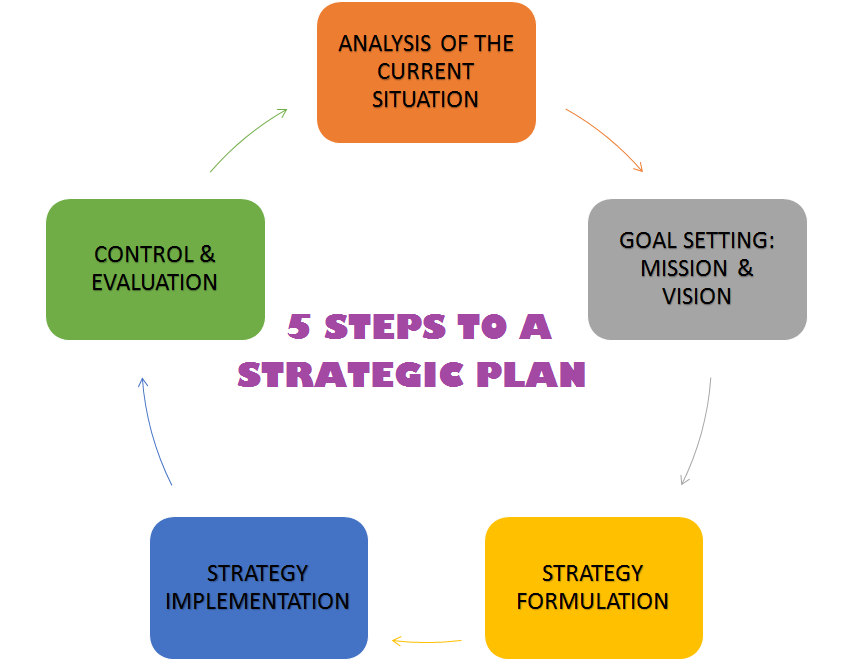
When done correctly, strategic HR Planning provides many direct and indirect benefits for a company. These include:
- the encouragement of proactive behavior,
- explicit communication of company goals
- stimulation of critical thinking
- ongoing examination of assumptions
- identification of gaps between the company’s current situation and its future vision
- the encouragement of line managers’ participation in the strategic planning process,
- the identification of HR constrains and opportunities
- the creation of common bonds within the organization.
(Gómez-Mejía. Balkin & Cardy 2016, 48-55.)
In developing an effective HR strategy, an organization faces several challenges. These include:
- putting in place a strategy that creates and maintains a competitive advantage for the company and reinforces the overall business strategy
- avoiding excessive concentration on day-to-day problems
- developing strategies suited to unique organizational features
- coping with the environment in which the business operates
- securing management commitment
- translating the strategic plan into action
- combining intended and emergent strategies
- accommodating change.
(Gómez-Mejía. Balkin & Cardy 2016, 48-55.)
Strategic HR choices for an organization are the options available in the design of its human resources systems. In several HR fields, organizations must make strategic decisions, including workflows, scheduling, relocation of workers, performance evaluation, training and career growth, benefits, employee rights, employee and labor relations, and international management. (Gómez-Mejía. Balkin & Cardy 2016, 48-55.)
Selecting HR Strategies to Increase Firm Performance
To be successful, HR strategies must match the environment in which the company operates, specific organizational characteristics, and organizational strengths with overall organizational strategies, and HR strategies should also be mutually compatible and reinforce one another. (Gómez-Mejía. Balkin & Cardy 2016, 55-61.)
The HR Department and Managers: An Important Partnership
The main responsibility for the efficient use of human resources lies with the supervisors. Therefore, all managers are supervisors of staff. HR professionals have the task of serving as internal advisors or experts, helping managers do their jobs better. (Gómez-Mejía. Balkin & Cardy 2016, 62-63.)
There has recently been a significant increase in the number of HR professionals. This demonstrates both the growth and complexity of government regulations, and a greater understanding of the importance of HR concerns in achieving business goals. (Gómez-Mejía. Balkin & Cardy 2016, 62-63.)
Case Ethics: ”Child refugees in Turkey making clothes for UK shops”
This article was published on 24th of October 2016, in BBC News. Article describes how the undercover BBC investigation found out that Syrian refugee kids made clothes for the British shoppers. Panorama investigated factories in Turkey and found that the children were working for Marks and Spencer and online retailer Asos. Adult refugees have also been found working illegally on the jeans from Zara and Mango. Even though, all the brands say they carefully monitor their supply chains and do not tolerate the exploitation of refugees or children. (BBC 2016.)
Panorama found seven Syrians working in one of the British retailer’s main factories. The refugees often earned little more than a pound an hour – well below the Turkish minimum wage. They were employed through a middleman who paid them in cash on the street. (BBC 2016.)
Danielle McMullan, from the Business & Human Rights Resource Centre, says the brands need to understand that they are responsible. (BBC 2016.)
”They have a responsibility to monitor and to understand where their clothes are being made and what conditions they are being made in.”
Danielle McMullan
The investigation also found Syrian refugees working 12-hour days in a factory that was distressing jeans for Mango and Zara. The refugees were involved in spraying hazardous chemicals to bleach the jeans, but most of the workers did not even have a basic face mask.(BBC 2016.)
Mango says that the factory was working as a sub-contractor without its knowledge. Its subsequent inspection did not find any Syrian workers and found ”good conditions except for some personal safety measures”. (BBC 2016.)
Article: ”3 Better ways to Employ Global Talent”
This article was published on 11th of Decembet 2015, in Forbes by Megan Matt. In the Article Matt describes 3 ways to employ global talents ethically while outsourcing.
1. Keep your employees safe and healthy
When your workers are in a country where unemployment and poverty are high, you need to be careful not to directly relate compensation to the risk of personal safety. Security isn’t something that staff can bring up to you before it’s too late or they leave because they don’t think you care. This is something you need to know through daily conversations with them. (Matt 2015.)
2. Treat people like people
Supervisors should take conscious time to get to know their team and really listen to them talk about their work. Having an ambitious and curious staff, they can have in place a transparent, clear compensation plan tied to software certifications, with regular bumps at each certification in the series. This helps the manager to micromanaging side at bay because if the staff have downtime they always have something else to do: study for more certifications and higher pay. (Matt 2015.)
3. Embrace other Cultures but do not abandon your own core values
Outsourcing can be a great way particularly for small business owners to compete with big players (most of whom do not outsource themselves so ethically). But too many these days people speak of derisively in other countries and businessmen delegate only the most awful of tasks abroad. Matt argues that this could be done better and, as with any employee, it is important to build satisfying relationships and make meaningful contributions to the staff’s lives. (Matt 2015.)
Article: ”The only way is ethics: a new approach to outsourcing social care”
This article was published on 20 of August 2018, in The Guardian by Bob Hudson. The article explains about the popularity of outsourcing the public services in UK, especially to the private sector. It has never been more the case than in adult social care, where private businesses pay for the vast majority of the supply on both the personal care and residential care sectors. However, there have been many recent struggles and scandals with this outsourcing model. Weak contracting, inadequate budgets, poor supervision, insufficient regulation and over-stretching providers have all been identified as contributing factors to the model’s fragility.
However, far less attention has been paid to the ethics of decision-making by members of the public services – and the need for an ethical commissioning strategy. That could cover a variety of requirements. (Hudson 2018.)
- Ethical Employment: Commissioners must be able to differentiate and prioritize those who serve as responsible employers between the workplace activities of various providers. have effective training, development and supervision. Outlaw false self-employment and zero-hours contracts; and encourage staff to participate in collective bargaining. (Hudson 2018.)
- Tax Compliance: Ownership of all companies contracted to provide public services should be available on public record. (Hudson 2018.)
- Transparency: A transparency check may clearly state that if a public institution has a legal contract with a private provider, the contract must ensure complete accountability and accessibility without recourse to the protection of ”business confidentiality”. (Hudson 2018.)
- Localism: It is important to concentrate on smaller and more local commissioning – a challenge for commissioners of public services who typically prefer working with a limited number of large organisations with proven contracting infrastructures. (Hudson 2018.)
- Ethical Vision: To bring effective change in social care for adults, a guiding vision is required, grounded in ethical values of promoting well-lived good lives and preserving the broader cultural, social, and environmental well-being of a local region. Ethical commissioning should be developed as part of a wider plan to establish ethical standards in all aspects of public life. (Hudson 2018.)
References
Photo source URL: https://unsplash.com/photos/iusJ25iYu1c Accessed: 1st of April 2020.
BBC News. 2016. Child refugees in Turkey making clothes for UK shops. URL: https://www.bbc.com/news/business-37716463 Accessed: 1st of April 2020.
Gomez-Mejia, L.R., Balkin, D.B. and Cardy, R.L. 2016. Managing Human Resources. Global Edition 8/E
Hudson 2018. The Guardian. The only way is ethics: a new approach to outsourcing social care. URL: https://www.theguardian.com/society/2018/aug/20/ethics-new-approach-outsourcing-social-care Accessed: 1st of April 2020.
Matt. 2015. Forbes. Ethical Outsourcing: 3 Better ways to Employ Global Talent. URL: https://www.forbes.com/sites/ellevate/2015/12/11/ethical-outsourcing-3-better-ways-to-employ-global-talent/#7c0d387d355c Accessed: 1st of April 2020.








 source of the image:
 pblconblog.video.blog
