In today’s whirlwind of algorithms, automation, and AI-generated content, one truth remains timeless: people connect with people. No matter how efficient your tools or strategies become, authenticity in writing is what sets truly engaging brands apart.
Staying authentic in digital marketing isn’t easy. With the pressure to post fast, follow trends, and optimize every line for SEO, many marketers accidentally lose the human voice that audiences crave. Let’s unpack how to write engaging, genuine content and what mistakes can make your text feel disconnected.
What makes writing engaging and authentic?
Start with empathy, not algorithms. Before you type a word, think about who you’re writing for, not just what you’re trying to sell. What do they care about? The best marketing speaks to people, not at them.
Tell small, honest stories. A short real-life example, something imperfect or personal, can be more powerful than a polished slogan. Share moments your audience can relate to.
“Last week, I accidentally deleted our email list. Here’s what that mistake taught me about data backups.”
“We didn’t get this campaign right the first time, but we learned something better about our audience.”
Use your real voice. Skip the corporate clichés. If you wouldn’t say it to a friend, it probably doesn’t belong in your tone.
Write for connection, not perfection. Imperfect writing feels more real. A conversational tone, a little humor, even a sentence fragment, all of that builds trust.
Keep it fresh and human in a fast-moving world. The digital landscape changes daily. But being “current” doesn’t mean chasing every viral trend, it means understanding the values and feelings behind those trends.
Common mistakes that make your text feel inauthentic
Sounding like a robot. Overusing generic phrases like “innovative solutions,” “seamless experience,” or “trusted partner” makes your writing blend into the noise.
Writing only for SEO. Keyword stuffing kills flow. Search engines now reward meaningful, natural writing, so focus on clarity and intent first.
Trying too hard to sell. Readers can smell desperation. Instead of pushing a product, start a conversation. Help, don’t hustle.
Avoid copying competitors’ tone.
Your brand’s voice should be unique. Following trends may yield temporary clicks, but it damages long-term trust.
Ignoring your audience’s language. Authenticity isn’t about your brand’s vocabulary, it’s about your audience’s. Listen to how they talk in comments, reviews, and forums, and mirror that tone genuinely.
Quick tips to keep your writing real
Write as if you’re talking to one person, not a crowd.
Read your text out loud, if it feels stiff, rewrite it.
Ask yourself: Would I share this if I weren’t being paid to?
Be transparent about what you don’t know or can’t promise.
Show emotion. It’s okay for marketing to feel human.
So how to make sure your text stays authentic and engaging to your audience?
In a digital world obsessed with speed and scale, authenticity is your secret advantage. Readers, and customers are smarter than ever. They can tell when your words come from a genuine place versus a content calendar.
So slow down. Write like a person. Because no algorithm can replace a human voice that truly connects.
In this learning blog entry, I am going to present key concepts, theories and models from Chapter 1: Meeting Present and Emerging Strategic Human Resource Challenges, from the eight edition (2016) of Managing Human Resources by Gómez-Mejía, Balkin and Cardy. I am going to summarize the key concepts from this chapter including Challenges in Human Resource Management, Planning and Implementing Strategic HR Policies, Selecting HR Strategies to Increase Firm Performance and The Important partnership between HR Department and Managers . I will also analyze a case: “Child refugees in Turkey making clothes for UK shops” and two other articles related to this topic.
Human Resource Management: The Challenges
Managers oversee others and are responsible for the timely and correctly performed actions that support the successful performance of their unit. All workers may be differentiated as line or personnel including managers. Line workers are directly involved in producing the company’s products or providing the facilities, A line manager manages line staff. Staff workers are the ones who support the work of the unit. Employees may also be categorized by how much responsibility or expertise they have. For instance, in senior or junior staff. (Gómez-Mejía. Balkin & Cardy 2016, 30.)
The Major HR Challenges facing managers today can be divided into three categories:
The Environmental challenges (Rapid change)
Forces external to a firm that affect the firm’s performance but are beyond the control of management. These can be for example:
The rise of the internet, workforce diversity, economic globalization, legislation, evolving work and family roles, skill shortages, the rise of service sector and catastrophic events as a result of natural disasters and terrorism.
The Organizational challenges
Concerns or problems internal to a company; often a by-product of environmental forces. For example:
Choosing the competitive position, decentralization, downsizing, organizational restructuring, the rise of self-managed work teams, the increased number of small businesses, organizational culture, advances in technology, and the rise if outsourcing.
Decentralization means moving responsibility and decision-making authority from a central office to people and places closer to the situation which requires attention.
Downsizing means a reduction in company’s workforce to improve its quality.
Organizational culture defines the fundamental values and principles an organization’s members hold. Such views work unconsciously and define the perspective of an organization regarding itself and its world in a basic taken norm.
The Individual challenges
Human resource issues that address the decisions most pertinent to individual employees. These can be for example:
Matching the right people with the organization, treating employees ethically and engaging in socially responsible behavior, increasing individual productivity, deciding whether to empower employees, taking steps to avoid brain drain, and dealing with issues of job insecurity.
(Gómez-Mejía. Balkin & Cardy 2016, 30-48.)
Planning and Implementing Strategic HR Policies
When done correctly, strategic HR Planning provides many direct and indirect benefits for a company. These include:
the encouragement of proactive behavior,
explicit communication of company goals
stimulation of critical thinking
ongoing examination of assumptions
identification of gaps between the company’s current situation and its future vision
the encouragement of line managers’ participation in the strategic planning process,
the identification of HR constrains and opportunities
the creation of common bonds within the organization.
(Gómez-Mejía. Balkin & Cardy 2016, 48-55.)
In developing an effective HR strategy, an organization faces several challenges. These include:
putting in place a strategy that creates and maintains a competitive advantage for the company and reinforces the overall business strategy
avoiding excessive concentration on day-to-day problems
developing strategies suited to unique organizational features
coping with the environment in which the business operates
securing management commitment
translating the strategic plan into action
combining intended and emergent strategies
accommodating change.
(Gómez-Mejía. Balkin & Cardy 2016, 48-55.)
Strategic HR choices for an organization are the options available in the design of its human resources systems. In several HR fields, organizations must make strategic decisions, including workflows, scheduling, relocation of workers, performance evaluation, training and career growth, benefits, employee rights, employee and labor relations, and international management. (Gómez-Mejía. Balkin & Cardy 2016, 48-55.)
Selecting HR Strategies to Increase Firm Performance
To be successful, HR strategies must match the environment in which the company operates, specific organizational characteristics, and organizational strengths with overall organizational strategies, and HR strategies should also be mutually compatible and reinforce one another. (Gómez-Mejía. Balkin & Cardy 2016, 55-61.)
The HR Department and Managers: An Important Partnership
The main responsibility for the efficient use of human resources lies with the supervisors. Therefore, all managers are supervisors of staff. HR professionals have the task of serving as internal advisors or experts, helping managers do their jobs better. (Gómez-Mejía. Balkin & Cardy 2016, 62-63.)
There has recently been a significant increase in the number of HR professionals. This demonstrates both the growth and complexity of government regulations, and a greater understanding of the importance of HR concerns in achieving business goals. (Gómez-Mejía. Balkin & Cardy 2016, 62-63.)
Case Ethics: ”Child refugees in Turkey making clothes for UK shops”
This article was published on 24th of October 2016, in BBC News. Article describes how the undercover BBC investigation found out that Syrian refugee kids made clothes for the British shoppers. Panorama investigated factories in Turkey and found that the children were working for Marks and Spencer and online retailer Asos. Adult refugees have also been found working illegally on the jeans from Zara and Mango. Even though, all the brands say they carefully monitor their supply chains and do not tolerate the exploitation of refugees or children. (BBC 2016.)
Panorama found seven Syrians working in one of the British retailer’s main factories. The refugees often earned little more than a pound an hour – well below the Turkish minimum wage. They were employed through a middleman who paid them in cash on the street. (BBC 2016.)
Danielle McMullan, from the Business & Human Rights Resource Centre, says the brands need to understand that they are responsible. (BBC 2016.)
”They have a responsibility to monitor and to understand where their clothes are being made and what conditions they are being made in.”
Danielle McMullan
The investigation also found Syrian refugees working 12-hour days in a factory that was distressing jeans for Mango and Zara. The refugees were involved in spraying hazardous chemicals to bleach the jeans, but most of the workers did not even have a basic face mask.(BBC 2016.)
Mango says that the factory was working as a sub-contractor without its knowledge. Its subsequent inspection did not find any Syrian workers and found ”good conditions except for some personal safety measures”. (BBC 2016.)
Article: ”3 Better ways to Employ Global Talent”
This article was published on 11th of Decembet 2015, in Forbes by Megan Matt. In the Article Matt describes 3 ways to employ global talents ethically while outsourcing.
1. Keep your employees safe and healthy
When your workers are in a country where unemployment and poverty are high, you need to be careful not to directly relate compensation to the risk of personal safety. Security isn’t something that staff can bring up to you before it’s too late or they leave because they don’t think you care. This is something you need to know through daily conversations with them. (Matt 2015.)
2. Treat people like people
Supervisors should take conscious time to get to know their team and really listen to them talk about their work. Having an ambitious and curious staff, they can have in place a transparent, clear compensation plan tied to software certifications, with regular bumps at each certification in the series. This helps the manager to micromanaging side at bay because if the staff have downtime they always have something else to do: study for more certifications and higher pay. (Matt 2015.)
3. Embrace other Cultures but do not abandon your own core values
Outsourcing can be a great way particularly for small business owners to compete with big players (most of whom do not outsource themselves so ethically). But too many these days people speak of derisively in other countries and businessmen delegate only the most awful of tasks abroad. Matt argues that this could be done better and, as with any employee, it is important to build satisfying relationships and make meaningful contributions to the staff’s lives. (Matt 2015.)
Article: ”The only way is ethics: a new approach to outsourcing social care”
This article was published on 20 of August 2018, in The Guardian by Bob Hudson. The article explains about the popularity of outsourcing the public services in UK, especially to the private sector. It has never been more the case than in adult social care, where private businesses pay for the vast majority of the supply on both the personal care and residential care sectors. However, there have been many recent struggles and scandals with this outsourcing model. Weak contracting, inadequate budgets, poor supervision, insufficient regulation and over-stretching providers have all been identified as contributing factors to the model’s fragility.
However, far less attention has been paid to the ethics of decision-making by members of the public services – and the need for an ethical commissioning strategy. That could cover a variety of requirements. (Hudson 2018.)
Ethical Employment: Commissioners must be able to differentiate and prioritize those who serve as responsible employers between the workplace activities of various providers. have effective training, development and supervision. Outlaw false self-employment and zero-hours contracts; and encourage staff to participate in collective bargaining. (Hudson 2018.)
Tax Compliance: Ownership of all companies contracted to provide public services should be available on public record. (Hudson 2018.)
Transparency: A transparency check may clearly state that if a public institution has a legal contract with a private provider, the contract must ensure complete accountability and accessibility without recourse to the protection of ”business confidentiality”. (Hudson 2018.)
Localism: It is important to concentrate on smaller and more local commissioning – a challenge for commissioners of public services who typically prefer working with a limited number of large organisations with proven contracting infrastructures. (Hudson 2018.)
Ethical Vision: To bring effective change in social care for adults, a guiding vision is required, grounded in ethical values of promoting well-lived good lives and preserving the broader cultural, social, and environmental well-being of a local region. Ethical commissioning should be developed as part of a wider plan to establish ethical standards in all aspects of public life. (Hudson 2018.)
In this learning blog entry, I am going to present key concepts, theories and models from Chapter 6: Managing Employee Separations, Downsizing and Outplacement, from the eight edition (2016) of Managing Human Resources by Gómez-Mejía, Balkin and Cardy. I am going to summarize the key concepts from this chapter including Defining Employee Separations, Types of Employee Separations, Managing Early Retirements, managing Layoffs and Outplacement. I will also present three different cases “Nokia closes plant in Germany and relocates in Romania”, “Nokia cuts 3500 jobs ”to ensure profitability”, and “Hundreds of Nokia’s outsourced Symbian developers leaving Accenture.”continuing with two other articles related to this topic.
Managing Employee Separations, Downsizing, and Outplacement
What are Employee Separations?
Employee separations occur when employees terminate the members of an organization. The turnover rate is a measure of the rate at which employees leave the firm. Separations and outplacement can be managed effectively. In well managed companies they monitor the turnover rate at which employees leave the firm. By proactive strategies managers should prepare. (Gómez-Mejía. Balkin & Cardy 2016, 210.)
for the outflow of their human resources.The separations within workers have both costs and benefits. (Gómez-Mejía. Balkin & Cardy 2016, 210.)
The costs include
Recruitment costs
The recruitment costs can include advertising the work vacancy and hiring a skilled recruiter to travel to various locations
Selection costs
Selection costs are associated with selecting, hiring and placing a new employee in a job. Interviewing the job applicant includes the costs associated with travel to the interview site and effectively organize the interviews and arranging meeting to make selection decisions. Also testing the applicant, a conducting reference checks, relocation and housing costs might occur.
Training costs
Most new employees need some specific training to do their job effectively. Training costs also include costs associated with an orientation to the company’s values and culture. There also might be costs of instruction, books and materials for training courses.
Separation costs
A company incurs separation costs for all the employees who leave, whether they will be replaced. The largest separation cost is compensation in terms of pay and benefits. Other separation costs are associated with the administration of the separation itself. It often includes exit interview, an employees’ final interview to find out the reason why the employee is leaving or to provide counseling and assistance in finding a new job. It is common practice in bigger companies to provide departing employees with outplacement assistance, a program in which companies help their departing employees find jobs more rapidly by providing them with training in job-search skills. (Gómez-Mejía. Balkin & Cardy 2016, 210-213.)
The benefits include
Reduced labor costs
By reducing the size of its workforce, a company will reduce its overall labor costs. While separation costs may be significant in a layoff, the wage savings resulting from the loss of certain workers will easily outweigh the separation compensation and other layoff related expenses.
Replacement of poor performers
Identifying poor performers and helping them improve their performance are an important part of management. If an employee does not respond to coaching or suggestions, it could be better to fire him or her so that they can bring in a new, more skilled employee.
Increased innovation
Separations create opportunities for the enhancement of productive individuals. They also open up entry-level jobs as it attracts workers from inside. New hires recruited from outside are an essential source of creativity in companies and can provide a fresh perspective.
Opportunity for greater diversity
Separations create opportunities to recruit workers from a diverse background and to redistribute the workforce’s ethnic and gender diversity while maintaining control over recruiting practices and consistency with government policies. (Gómez-Mejía. Balkin & Cardy 2016, 210-213.)
Types of Employee Separations
Employees can willingly or involuntarily leave. Voluntary separations require retirements and quits. Discharges and layoffs include the involuntary separations. If an employee is forced to leave involuntarily, a much higher level of documentation is needed to prove that the decision by a manager to fire the employee is fair.(Gómez-Mejía. Balkin & Cardy 2016, 214-215.)
Managing Early Retirements
Early retirement policies include two features:
A package of financial incentives
that makes it attractive for senior employees to retire earlier than they had planned
An open window that restricts eligibility to s fairly short period of time,
after the window is closed, the incentives are no longer available.
Downsizing is a company strategy to reduce the scale and scope of its business in order to improve the company’s financial performance. When downsizing, an organization, managers may elect to use voluntary early retirements as an alternative to layoffs. Rightsizing is the process of reorganizing a company’s workers to improve their productivity. Possible early retirement plans must be handled in such a way that qualifying workers do not feel to be forced to retire. (Gómez-Mejía. Balkin & Cardy 2016, 214-217.)
Managing Layoffs
After all cost-cutting options are exhausted, layoffs will be used as a last resort. Important factors in the implementation of a separation policy include:
Notifying employees
Developing layoff criteria
Communicating to laid-off employees
Coordinating media relations
Maintaining security
Reassuring survivors of the layoff
Attrition is an employment policy designed to reduce the company’s workforce by not refilling job vacancies that are created by turnover
Hiring freeze is an employment policy designed to reduce the company’s workforce by not hiring any new employees into the company.
Outplacement
It is a good idea for the company to use outplacement programs to help separated workers deal with their concerns and to decrease the amount of time they are unemployed, no matter what strategy is used to reduce the workforce. (Gómez-Mejía. Balkin & Cardy 2016, 218-223.)
Case 7 A: ”Nokia closes plant in Germany and relocates in Romania”
This article was published on 17th of January 2008, in Communicating Labor Rights Blog. In this news is described how The German government asked Nokia to reconsider closing a plant in Germany, with plenty of job cuts and the transfer of the factory to Romania. The Finnish management of the world’s leading cell phone manufacturer has announced the abolition of 4,000 jobs without the slightest knowledge or consultation, according to the ETUC. (Yle 2008.)
In specific, it must be assured that without sanctions businesses would not be able to run roughshod over the rights of European and national workers. In any case, it must be assured that no cuts or changes can be made without proper detailed knowledge and careful consultations with representatives of the workers and their labor unions. (Yle 2008.)
Case 7 B: “Nokia cuts 3500 jobs ”to ensure profitability””
This article was published on 29th of September 2011, in Yle Uutiset.
Nokia informed workers Thursday about recent, dramatic job cuts. There are 3,500 jobs to go. The only four-year-old plant in Cluj, Romania, is scheduled to be closed by the end of this year. Meanwhile the fates of those hanging in the balance in Hungary, Mexico and Salo, Finland. The company’s Executive Vice President of Markets, Niklas Savander told YLE the job cuts were intended to ensure the company remains profitable both now and in the future. (Yle 2011.)
”It is impractical to manufacture products in Europe when one has fly all the components to Europe and then fly the readymade phones back to Asia,” Niklas Savander stated.
Yle 2011
Savander confirmed the company planned to end the assembly of phones at the Salo plant and transfer operations to Asia. (Yle 2011.)
Case 7 C: “Hundreds of Nokia’s outsourced Symbian developers leaving Accenture”
This article was published on 2nd of April 2012, in Yle uutiset. Nokia continued to be in the news due to their employment and economical situation.
The news reported that hundreds of former Nokia workers at the Accenture consulting company are reportedly leaving the company and demanding severance packages. Accenture sold the packages last autumn to staff who were outsourced only by Nokia. Up to 400 former Nokia employees have approved the kits, according to a survey by a shop steward. (Yle 2012.)
“Around 40 percent of those who were transferred have sought [the pay-offs], and a majority of them have signed leaving agreements. That’s based on the survey we commissioned.” – said shop steward Sami Sallmén
Yle 2012
Nokia transferred 1,200 Symbian developers to Accenture. They continued to work on the Symbian operating system while contracted to their new employer. The outsourcing policy had been criticized by Unions right from the start. I had anticipated that the Symbian developers–working with their new employers on an operating system to be replaced by Windows Phone as Nokia’s main mobile platform–will face a short career. (Yle 2012.)
Accenture management keeps the story to a low profile. The marketing department of the company explained by email that there is a voluntary lay-off program. It says the packages were given to those former workers at Nokia who have not yet found new responsibilities within Accenture. The business does not confirm how many former developers had left Symbian. (Yle 2012.)
Article: ”Making Exit Interview Count”
This article was published by Everett Spain and Boris Groysberg, April 2016 in Harvard Business Review.
In the article is explained how Skilled employees are the assets in the knowledge economy which drive organizational success. And organizations have to learn from them — why they stay, why they quit, and how they need to improve the company. A constructive exit interview— whether it’s a face-to-face discussion, questionnaire, survey or combination — can catalyze the communication skills of executives, expose what’s or isn’t working inside the company, identify hidden problems and opportunities, and generate critical competitive intelligence. (Spain & Groysberg 2016.)
By communicating to workers that their interests matter, it can enhance commitment and improve loyalty. And for future years it will turn the leaving employees into business ambassadors.(Spain & Groysberg 2016.)
In the article they suggest six overall goals for a strategic exit interview process and techniques to make it successful.
Have interviews conducted by second- or third-line managers.
Make exit interviews mandatory for at least some employees. And because standard interviews enable you to spot trends, but unstructured ones elicit unexpected insights, consider combining the two approaches in semi structured interviews.
(Spain & Groysberg 2016.)
Article: ” 3 Ways To Handle The Exit Of Employees”
This article was published by Pallavi Jha, 26th of July 2016, on Entrepreneur India. It lists three ways organisations can handle the exit of employees
Have an open conversation
Having a transparent conversation with the employee will give you a chance to understand what needs your organisation has not met, that a competitor possibly has.
Be supportive
an organisation that supports an employee’s decision to move on demonstrates that the company wants the best for its people, thus making the employees feel cared for.
Be prepared
Organizations with a clear succession plan are better able to handle change, ensure a smooth transition from the replacement to a new position and have good leadership in place in general.(Jha 2016.)
For an employer, the way in which you treat a resignation affects the perspective on the employee that the rest of the organization should follow.That’s why it is essential to ensure that these resignations are handled with careful insight and wise discretion, thus setting a positive precedent within the company. (Jha 2016.)
References
Gomez-Mejia, L.R., Balkin, D.B. and Cardy, R.L. 2016. Managing Human Resources. Global Edition 8/E.
In this learning blog entry, I am going to present key concepts, theories and models from Chapter 14: Respecting Employee Rights and Managing Discipline, from the eight edition (2016) of Managing Human Resources by Gómez-Mejía, Balkin and Cardy. I am going to summarize the key concepts from this chapter including Employee rights, Management rights, Employee Rights Challenges, Disciplining Employees, Administering and Managing Discipline, Managing Difficult Employees and Preventing the Need for Discipline with Human Resource Management. I will also present three different cases “New York Police Inspector Is Charged with Sexually Abusing Female Officer”, “Receipt rage: Why food is being served with a side of hate” and “Flint family says Navy is retaliating for speaking out about water crisis”, continuing with two other articles related to this topic.
Employee rights
A right is the ability to engage in conduct that is protected by law or a social sanction, free from interference by any another party. In the employment relationship, both employees and employers have rights. Employee rights fall into three categories:
Statutory rights
The right protected by specific laws. For example, protection from discrimination, safe work condition, the right to form unions¨
Contractual rights
A right based on the law of contracts.
employment contracts that spells out explicitly the terms of the employment relationship for both employee and employer
due process which is equal and fair application of a policy or law
wrongful discharge is termination of an employee for reasons that are either illegal or inappropriate
union contracts and employment policies
Other rights
The rights to ethical treatment, limited right to privacy and free of speech
(Gómez-Mejía. Balkin & Cardy 2016, 457-461.)
Management Rights
Employers rights, often called management rights refer that employers have the right to run their business and make a profit from it. These rights are supported by property laws such as, common law and the values of a society that accepts the concepts of private enterprise and the profit motive.
Management rights contain the right to manage the workforce, and to hire, promote, assign, discipline and discharge employees. Another important management right is employment at will. A common-law rule used by employers to assert their right to terminate an employee at any time for any cause, there are three key exceptions to the employment-at-will doctrine: public policy exceptions, implied contracts, and lack of good faith and fair dealing. (Gómez-Mejía. Balkin & Cardy 2016, 462-463.)
Employee rights Challenges: A balancing Act
Sometimes the rights of the employers and employees are in conflict. For example, a random drug-testing policy can create a conflict between an employer’s responsibility to provide a safe workplace and employees’ rights to privacy. HR professionals need to find a balance with the rights of the employee and with those of the employer, when designing guidelines that address workplace issues such as random drug testing, electronic monitoring of employees, whistleblowing, moonlighting and office romance. (Gómez-Mejía. Balkin & Cardy 2016, 463-471.)
Discipline Employees
Managers often rely on discipline procedures to communicate to employees the importance to change their behavior. There are two approaches to discipline. The progressive discipline procedure, a series of management interventions that gives employees opportunities to correct undesirable behaviours before being fired. It relies on increasing levels of punishment leading to discharge. The positive discipline procedure on the other hand uses counseling sessions between supervisor and employee to encourage them to rather monitor his or her own behavior and take responsibility for their actions. Both procedures are designed to deal with forms of misconduct that are correctable. (Gómez-Mejía. Balkin & Cardy 2016, 472-475.)
Administering and Managing Discipline
To avoid conflict and lawsuits, managers must administer discipline properly. This entails ensuring that disciplined employees receive due process. The due process means fair and consistent treatment for everyone. Managers also need to be aware of the standards used to determine whether an employee was treated fairly and whether the employee has a right to appeal disciplinary action. For a disciplinary system to be effective, an appeal mechanism must be in place. (Gómez-Mejía. Balkin & Cardy 2016, 475-477.)
Basic standards if discipline
Communication of rules and performance criteria
Documentation of the facts
Consistent response to rule violations
A hot-stove rule is a model of disciplinary action, discipline should be immediate and provide ample warning, and be consistently applied to all. (Gómez-Mejía. Balkin & Cardy 2016, 476.)
Managing Difficult Employees
It is often necessary to discipline employees who exhibit poor attendance (absenteeism and/or tardiness), poor performance, disobedience, workplace bullying, or substance abuse. Managing the discipline process in these situations requires a balance of a good judgement and common sense from the supervisors. Discipline may not be the best solution in all cases. (Gómez-Mejía. Balkin & Cardy 2016, 478-482.)
Preventing the Need for discipline with Human Resource Management
The need for discipline can often be avoided by a strategic and proactive approach to HRM. A company can avoid discipline by
– recruiting and selecting the right employees for current positions as well as future opportunities
– training and developing workers, investing in employees’ training and development can save a company from having to deal with incompetents or workers whose skills are not on the needed level.
– designing jobs and career paths that best utilize people’s talents, by designing effective performance appraisal systems and by compensating employees for their contributions. (Gómez-Mejía. Balkin & Cardy 2016, 483-484.)
CASE A: “New York Police Inspector Is Charged with Sexually Abusing Female Officer”
This article was published by Christopher Mele & Al Baker, November 18, 2016, on The New York Times. A deputy inspector with the New York Police Department was charged with sexually abusing a female officer that he supervised as the commanding officer. The inspector was charged with sexual abuse, forcible touching, official misconduct and harassment and was relieved of his gun and badge and placed on paid modified duty. (Mele & Baker 2016).
CASE B: “Receipt rage: Why food is being served with a side of hate”
This article was published by Sky McCarthy, 28th of August in 2015, on Fox News. In the article is described how often the employees of restaurants need to receive a bad behavior from the customers.(McCarthy 2015.)
For example, when the diners have left poor tips, or none at all, with a mean note. This week, a waitress in New Jersey found a nasty “LOL” remark on the check after an unhappy customer said the service was too slow. Most of these stories play out in the field of public opinion, especially on social media. But after the media attention fades, some of them have ended careers, destroyed businesses and even created lawsuits.(McCarthy 2015.)
“This type of behavior, and this case in particular, reveals a side of humanity that you thought was dead.”
Stuart Shanus. 2011. on FoxNews. (McCarthy 2015.)
CASE C: “Flint family says Navy is retaliating for speaking out about water crisis”
This article was published by Ellie Kaufman, 30th of November in 2016, on CNN health. The article describes how Lee Anne Walters and her family were the first in Flint, to discover that there were very high levels of lead in the water and alert the Environmental Protection Agency. But the family now says her criticism and advocacy during the water crisis has been met with workplace retaliation and harassment against her husband, a sailor with the US Navy.(Kaufman 2016.)
In his lawsuit, Dennis Walters claims that he has been ”subjected to a systematically hostile work environment” in which he was made to work unreasonably long hours without breaks and was denied training opportunities, according to court documents. He claims the stressful work environment has resulted in some physical symptoms including vomiting and nausea. This hostile working environment occurred after his wife started to advocate and criticize during the crisis, and brought public attention while trying to bring awareness for the crisis.(Kaufman 2016.)
Article: “Companies deny responsibility for toxic ‘forever chemicals’ contamination
This article was published by Emily Holden, 11th of September in 2019, on The Guardian. It is about how a chemical company executives have denied responsibility for a category of toxic fluorinated chemicals that have contaminated water supplies around the US and are now found in the bodies of nearly all Americans.
The class of chemicals, called PFAS, are in non-stick pans, water-resistant clothes, food packaging and firefighting foam. These chemicals do not break down in the environment and accumulate in the human body. Numerous studies link PFAS exposure with cancer, thyroid problems and developmental issues in children. These chemicals have been found in high levels in groundwater near industrial facilities and near military installations and airports that have used PFAS-based firefighting foam. (Holden 2019.)
The former Minnesota attorney general Lori Swanson, sued 3M for contamination of her state, said the company “knew about the risks of the chemicals to the drinking water, the environment and human health for decades but concealed its knowledge, subverted the science and kept pushing the chemicals out the door”. (Holden 2019.)
Article: “Employee privacy in the US is at stake as corporate surveillance technology monitors workers’ every move”
This Article was published by Ellen Sheng, 15th of April 2019 on CNBC. The article explains about the controversy between the vastly digitalizing work environments and the possible privacy issues coming along it. The emergence of devices and other technologies that allow companies to track, listen to, and even watch employees as business time raises questions about corporate monitoring rates. Privacy advocates warn that employees may be at risk of losing their sense of privacy while on the job if the modern technology is not used carefully. (sheng 2019.)
The key-points of this article are:
Corporate interest in surveillance seems to be on the rise to boost productivity.
A 2018 survey by Gartner found that 22% of organizations worldwide are using employee-movement data, 17% are monitoring work-computer-usage data, and 16% are using Microsoft Outlook- or calendar-usage data.
Employees are concerned over this invasion of privacy.
”Employees are in a difficult position. As more and more consumer privacy laws take shape, we’ve seen that there’s been a concern from companies that those privacy laws don’t apply to employees”
Lee Tien, Senior Staff Attorney, Electronic Frontier Foundation
According to Tien, the Companies should explain what they are doing. The empoloyees should always know that they are if they are subjected to surveillance and what it is covering and how it is being used. Also, Accenture advises businesses to ”co-own” employee data, and to develop policies and processes to ensure the data is used safely and ethically. The technology is increasingly evolving so it will take businesses longer to find out how to do it. (Sheng 2019.)
In this learning blog entry, I am going to present key concepts, theories and models from Chapter 16: Managing Workplace Safety and Health, from the eight edition (2016) of Managing Human Resources by Gómez-Mejía, Balkin and Cardy. I am going to summarize the key concepts from this chapter including Workplace safety and the Law, Managing Contemporary safety, health and behavioral issues, and introduce different safety and health programs. I will also present two cases “ Exhausted’ Merrill Lynch intern died from epileptic fit in shower after he ’pulled three all-nighters at bank where employees compete to work the longest hours” and “Do corporate wellness programs really work?” continuing with two other articles related to this topic.(Gómez-Mejía. Balkin & Cardy 2016, .)
Workplace Safety and The Law
Workplace safety laws and regulations can vary in different countries. But for example focusing on the Chapter 16 by Gomez-Mejia, Balkin and Cardy, in US, there are two sets of workplace safety laws:
Workers’ compensation
It’s an employer-funded insurance system that operates at the state level in US
The Occupational Safety and Health Act (OSHA)
It’s a federal law that mandates safety standards in the workplace.
Workers’ compensation includes of total disability losses, survivor, medical expense, and rehabilitation benefits- planned to guarantee effective and reasonable medical care to employees who get injured on the job, as well as income for them and their children or survivors. This also encourages employers to invest in workplace safety by requiring higher insurance premiums from employers with numerous workplace accidents and injuries.(Gómez-Mejía. Balkin & Cardy 2016, 530-531.)
The benefits of workers compensations are considerable, however there are always costs and it’s directly affected by accidents. The Premiums can increase dramatically or stay high for a long time as a result of a single injury. The workers compensation system can also be prone to fraud by both employers and employees. For example, not insuring the employees, avoiding the cost of paying workers’ compensation premiums, under reporting payrolls that the premiums are based are violations from the employers side. Employee fraud in different forms can also occur. (Gómez-Mejía. Balkin & Cardy 2016, 531-532.)
OSHA requires employers to provide a safe and healthy work environment and to keep records of occupational injuries and illnesses. It enforces the employers to obey with specific occupationalsafety and health standards that are observed by a system of inspections, citations, fines and criminal penalties. For example, Hazard Communication Standard is one OSHA standard, that gives employees the right to know about any dangerous chemicals or materials in the workplace. (Gómez-Mejía. Balkin & Cardy 2016, 532-534.)
Managing Contemporary Safety, Health and Behavioral Issues
The most significant safety, health and behavioral issues from employers can be for example:
violence in the workplace
cumulative trauma disorders
fetal protection
Hearing Impairment
Fetal protection, hazardous chemicals and genetic testing.
In prevention, monitoring, observing and providing support are crucial. Also, in all these areas the line managers and supervisors need to manage with variety of practical, legal and ethical questions that often is very important for keeping the balance of individual rights, like privacy rights, inside the company’s requirements. (Gómez-Mejía. Balkin & Cardy 2016, 538-545.)
Haz-Map can be an online decision support system for recognizing and preventing diseases caused by chemical and biological agents in the workplace. (Gómez-Mejía. Balkin & Cardy 2016, 545.)
Safety and Health programs
A safe working environment should be created by planning according to safety programs, it cannot be taken self-evidently. In well-planned inclusive safety programs, management involves employees. However, it should start from the highest level within the company so that managers and supervisors at all levels should be alleged with demonstrating safety awareness and responsible for the training and maintaining it. (Gómez-Mejía. Balkin & Cardy 2016, 545.)
Employee assistance programs also known as EAPs, are designed to help employees cope with physical, mental or emotional problems that are affecting their job performance negatively. These can include depression, anxiety, social problems or stress, that can lead to burnout. Wellness programs are preventive efforts designed to help employees identify their possible health risks and give tools to act before they become problems. (Gómez-Mejía. Balkin & Cardy 2016, 545-549.)
CASE 5A: “Exhausted’ Merrill Lynch intern died from epileptic fit in shower after he ’pulled three all-nighters at bank where employees compete to work the longest hours”
This article was published by Emma Thomas, 22nd of October in 2013, on Daily Mail. In the Article she explains a case where a young, 21-year-old intern died of an epileptic fit that may have been triggered by fatigue after working ’exceptional’ hours at a top investment bank. As was heard form an inquest. (Thomas 2013.)
A week from completing a desired placement at Bank of America Merrill Lynch’s London offices, his body was found in the shower at his accommodation. An inquest at Poplar Coroner’s Court heard that he was taking medication for epilepsy, but did not tell about it to anyone at the bank. However, he did not complained about his working hours or feeling unwell,only when he started to send emails to his parents sometimes at 5am or 6am – that he had worked through the night, they thought that he might not get enough sleep. (Thomas 2013.)
The intern’s Mr development officer at Merrill Lynch described, that it was not only because of the workload, but also due to peer pressure and competition between ambitious employees to work longer hours than each other.(Thomas 2013.)
This case sparked calls to mend the culture of punishingly long hours in the City of London after it emerged he had worked through the night several times in the days leading up to his death, and prompted Bank of America Merrill Lynch to launch a review.(Thomas 2013.)
Bob Elfring, the co-head of corporate and investment banking at Bank of America Merrill Lynch, said in the court that, while he did not think a ’clocking system’ should be put in place, it might be possible to introduce a way of analyzing the cards used by staff to swipe into a building to see if someone was repeatedly working long hours.(Thomas 2013.)
”He also said a global review had been launched, looking at issues including staffing and working hours at several levels, and said so far around 200 people have been interviewed. ’This is a very, very serious effort” (Thomas 2013).
Bob Elfring
CASE 5B: “Do corporate wellness programs really work?”
This article was published by Briana Morgaine, June 28, 2018 on LivePlan. In the article Morgaine explains how she among others lives a healthy lifestyle and cares about the health. Meaning that the idea of corporate wellness programs is incredibly appealing in the labor markets for them.(Morgaine 2018.)
She argues that in the 21st century, workplaces that merely ask employees to punch a clock just aren’t cutting it. The employees want a workplace with a strong company culture but also a workplace that works with them as individuals, prioritizing the employee care. The employees want to feel that the company have a vested interest in their health and well being.(Morgaine 2018.)
This way a company can also profit. Because the business owners get healthy employees, decreasing the sick leaves, and employees who likely will stay with a company long time and give it their all.(Morgaine 2018.)
A wellness program can include of example:
Giving employees discounts on their monthly health insurance premiums
Cash rewards
Providing discounted or free gym memberships
Offering healthier food options at work
Access to smoking cessation and weight-management programs
It is also important that the employees know that these kind of wellness programs exist for it to be efficient. And by using information like using institute policies, re-framing wellness initiatives and by creating specific programs the companies can make the wellness programs even more beneficent and tailored for their needs. (Morgaine 2018.)
Article: “Workplace Safety: Culture, Plans and Actions”
This article was published by Jay Smith, 1st of September, 2018 on OHS (Occupational Health & Safety) online.
”The main goal of a safety program is to prevent workplace deaths and injuries, as well as the serious consequences that these events can cause for workers, their families, and employers. Organizations with a strong safety culture that have established comprehensive safety programs, effectively act on them, and monitor their progress are the winners when it comes to workplace safety”(OHS 2018).
When reviewing the workplace Safety, the employers and employees need to consider aspects like:
Culture
Plans and actions, for example electrical safety program, hazard assessment, hazard prevention, hazard mitigation, electrical safety training,
Going beyond Compliance
Considering these it is clear that safety should come first. Overall the workplace safety can be accomplished through culture, plans, and actions. However, even with these factors it will only reach its full potential if there is effective leadership and employee engagement to support these processes. (OHS 2018.)
Article: ”9 Avoidable Workplace Health and Safety Hazards”
This article was published by Josh Spiro, May 14th, 2010 on Inc. In the article he tells about the most common and avoidable safety hazards in the workplace. All the workplace health and safety hazards can be costly, even to lives on the bottom line, but often they are preventable if you take the right safety measures and precautions.(Spiro 2010.)
Some of the common workplace health and safety hazards include: communicable disease, transportation accidents, workplace violence, slipping and falling, toxic events, particularly chemical and gas exposure, getting struck by objects, electrocution or explosion, repetitive motion and ergonomic injuries, and hearing loss.(Spiro 2010.)
Although some hazards are less likely to happen in some work spaces than others, it’s important to assess which hazards are most damaging to your business and your employees.(Spiro 2010.)
For the fourth Topic, I am going to present key concepts, theories and models from the chapters 10 & 11: Managing compensation and Rewarding Performance, from the eight edition (2016) of Managing Human Resources by Gómez-Mejía, Balkin and Cardy. I will summarize the key concepts from the chapters, introducing the topics such as Designing a compensation system, Compensation Tools, The legal environment and pay system governance, The challenges in pay-for-performance systems, Types of pay-for performance plans and designing it for Executives, salespersons ans small Firms. Summary also includes different sources including studies about motivation and references to ted talk by Dan Pink. In the end I will shortly present two different articles related to this topic.
Managing Compensation
Total compensation has three main elements, base compensation, the fixed pay received on a regular basis and pay incentives, programs designed to reward employees for good performance and benefits (indirect compensation for example health insurance, vacations, unemployment compensation.)
Compensation is the single most important cost in most firms. (Gómez-Mejía. Balkin & Cardy 2016, 315.)
Designing a compensation system
When a company do an effective compensation plan, it allows them to achieve its strategic objectives and it is comparable to the firm’s typical characteristics as well as to its environment. The pay options managers need to consider in designing a compensation system are:
Internal versus external equity
Fixed versus variable pay
Performance versus membership
Job versus individual pay
Egalitarianism versus elitism
Below market versus above market compensation
Monetary versus nonmonetary rewards
Open versus secret pay
Centralization versus decentralization of pay decisions
In all of these situations the best choices depend on how well they fit with business purposes and the individual organization(Gómez-Mejía. Balkin & Cardy 2016, 316-319).
Compensation Tools
There are two extensive categories of compensation tools:
Job-based approaches
The typical job-based compensation plan has three components: firstly, to achieve internal equity. Company can use job evaluation to assess the relative value of jobs throughout the organization. Second element is to achieve external equity. For example, a Company can use salary data on benchmark or key jobs gained from market surveys to set a certain pay policy. Third component is to achieve individual equity. Firms use a combination of experienced position and performance to create an individual’s position within the pay range for their job.(Gómez-Mejía. Balkin & Cardy 2016, 328 .)
Skill based approaches
Skill- based compensation systems are more expensive and more restrained in use. Skill-based pay rewards employees for developing depth skills, meaning of learning more about certain specialized area. But also developing Horizontal and breadth skills, learning about more areas for example and vertical skills for self-management.(Gómez-Mejía. Balkin & Cardy 2016, 328.)
The Legal Environment and Pay System Governance
The major federal laws governing compensation practices (in US.) are:
The Fair Labor Standards Act, that controls minimum wage and overtime payments and provides guidelines for classifying employees as exempt (excused) or nonexempt.
The Equal Pay Act, which prohibits pay discrimination based on gender.
and The internal revenue code, that specifies how various procedures of employee pay are subject to taxation.
Some countries and municipalities have comparable worth legislation, which calls for comparable pay for jobs that require comparable skills, effort, and responsibility and have comparable working conditions, even if the job content is different.(Gómez-Mejía. Balkin & Cardy 2016, 2340-343.)
Rewarding Performance
Pay-for-Performance: The Challenges
Incentive Pay-for-Performance programs can improve productivity, but managers also need to consider several challenges in their design and implementation. Employees may be tempted to do only what they get paid for, ignoring those intangible aspects of the job that are not explicitly rewarded. Cooperation and teamwork may be damaged if individual merit pay is too strongly emphasized. Individual merit systems assume that the employee is in control of the primary factors affecting their work productivity, which is not always true. (Gómez-Mejía. Balkin & Cardy 2016,353.)
Individual performance is difficult to measure and tying pay to inaccurate performance measures is likely to create problems. Pay incentive systems can be thought as an employee right and can be difficult to adapt to the organization’s changing needs. According to the credibility gap, many employees do not believe that the company rewards of good behavior and performance. Emphasizing merit pay can highly stress employees and lead to frustration for the job. Finally, merit pay can lead to decrease of an employee’s essential motivation.(Gómez-Mejía. Balkin & Cardy 2016,353-355.)
On TED TALK by Dan Pink about motivation in 2009, he referenced to the famous candle problem test by Psychologist Karl Duncker. The test measures measures the career motivation. The proposition was simple. The subject was given three key items: a candle, a book of matches, and a box of thumbtacks. Using these items, the goal was to position the candle in a way that, while lit, no wax would touch the ground. (Igeme, 2012.)
When seeing the final image, the answer seems quite obvious. By removing the tacks and utilize the box to catch the falling wax. A later variant of Duncker’s study conducted by Samuel Glucksberg, concluded that functional fixedness would cause individuals to neglect the use of the box as a possible platform and instead see it as a container for the tacks. However, the real interest in this study was not in the end- solution. The test was intentionally designed to be a performance indicator. (Igeme, 2012.)
Levels of performance became especially interesting as they could provide links into successfulbusinesses. Therefore, in repeated versions of the test, encouragements were introduced as a new variable to better understand the subjects’ performance. This encouragement was commonly money. The common view was that the money as a reward, would increase the performance. However the results were surprisingly contradictory. (Igeme, 2012.)
”That’s right. Those who were offered no incentive whatsoever were figuring out the Candle Problem the fastest. Money was found to actually decrease performance overall”(Igeme 2012).
On the TED TALK Dan Pink arguments that, along this test results and all the other scientific facts shows that the businesses should knowledge this when planning their compensations in a firm. He concluded that science knows that:
– THE REWARD narrows our focus and restricts our possibility
1 . those motivators we think are a natural part of business do work, but only in a surprisingly narrow band of circumstances
2. those if then rewards destroys creativity
3. the result to high performance isn’t rewards and punishments, but that unseen intrinsic drive- the drive to do things for their own sake. (Pink D 2009.)
Meeting the Challenges of Pay-For-Performance Systems
To avoid the problems sometimes associated with pay for performance systems, managers should:
Link pay and performance appropriately
Use pay for performance as part of a boarder HRM System
Build employee trust
Promote the belief that performance makes a difference
Use multiple layers of rewards
Increase employee involvement
Consider using nonfinancial incentives
If employees can participate in the design of the plan, it can improve its credibility and long-term success.(Gómez-Mejía. Balkin & Cardy 2016, 358-361.)
Types of Pay-for-Performance Plans
There are four different types of motivational programs. At the level of individual employees is a merit pays are most common. Merit pay becomes part of base salary and the bonuses given on a one-time basis, controlled by supervisory appraisals. At the next level, team-based plans reward the performance of groups of employees working together on joint projects or tasks, usually with bonuses and non-cash awards. At the level of the plant or business unit, gain-sharing is the program of choice. Gain-sharing rewards workers based on cost savings, usually in the form of a ”lump-sum bonus”. At the fourth and the highest level of the organization – the entire corporation– profit sharing and employee stock option plans, ESOPs, are used to link the company’s performance with employees’ financial rewards. Both plans are often used to fund retirement programs, for example.(Gómez-Mejía. Balkin & Cardy 2016, 362-371.)
Designing Pay-for-Performance Plans for Executives and Salespeople
Two employee groups, top executives and sales personnel are normally treated quite differently than most other employees in pay-for-performance plans. Short-term annual bonuses, long-term incentives, and perks may be used to motivate executives to make decisions that help the organization reach to its long-term strategic goals. Sales employees are making revenue for the company and their compensation system is normally used to boost productive behavior. A dependence on straight salary for salespeople is most appropriate, when maintaining customer relations and servicing existing accounts are the key targets. A dependence on straight commission is often appropriate if the company is just trying to increase sales. Most of the times, companies use a combination of the two plans. In Today’s globally competitive marketplace, many organizations are also using incentive programs to reward a good customer service.(Gómez-Mejía. Balkin & Cardy 2016, 372-379.)
Designing Pay-for-Performance Plans in Small Firms
Small companys often face specific challenges when designing pay-for-performance systems. Many times they are less likely to have necessary professional support to develop and administer all of the plans. Real or identified mistakes in assigning incentives can have a huge impact on the small companies. Especially nowadays the information travels fast, so there is often a thin line between personal and work life. Also because people are supposed to work together closely, the pay-for-performance plans in these firms are most likely to be successful if there is active employee participation in the development of the plan, incentives are linked to the achievement of organizational goals and informal feedback is provided to employees regularly. When designing these plans, most small companies find it useful to offer generous profit sharing and equity-based pay for employees.(Gómez-Mejía. Balkin & Cardy 2016, 3379-380.)
Research article: How Incentive Pay Affects Employee Engagement, Satisfaction, and Trust
This research article was published by Ogbonnava, C., Daniels, K. and Nielsen, K. March 2017, on Harvard Business Review.
The article explains about how most managers agrees that empowered, efficient workers are crucial to businesses success, regardless of the size of the organisation, industry or business strategy. The problem usually is, how to Motivate them. One common approach is offering performance-based incentive pay to employees, and it usually takes one of two forms: bonuses are offered to individuals based on their performance assessments, or bonuses are offered as organizational incentives, such as profit-related pay or shareholding.(Ogbonnava, Daniels, & Nielsen 2017.)
According to their research analysis, a job intensity results and employee performance compensation will give managers a pause. In certain cases, performance-related compensation can be viewed as a burden that only offers extra pay to employees by work process intensification. This poses fundamental questions as to how individual benefits will affect the health of workers in a sustainable way. (Ogbonnava, Daniels, & Nielsen 2017.)
Article: The Best Ways to Reward Employees
This Article was published on Entrepreneur Europe. In the article the Entrepreneur contributors argue that every company needs a strategic reward system for employees that addresses at least four areas: compensation, benefits, recognition and appreciation. And that often the problems occur in the reward systems when one of these factors are are missing. With some of these questions below, a company can review their strategic reward system(Entrerpreneur.)
Does it address compensation, benefits, recognition and appreciation? Is it aligned with your remaining business strategies? Is it driving the right behaviors for your company, as well as your performance goals? (Entrerpreneur).
Most importantly if the company rewards system needs modification the firm should not wait to fix them. Because at the end it can mean the difference between the business’ success and failure. (Entrerpreneur.)
In this learning blog entry, I am going to present key concepts, theories and models from reading the chapter 7: Appraising and Managing Performance, from the eight edition (2016) of Managing Human Resources by Gómez-Mejía, Balkin and Cardy. I am going to summarize the key concepts from this chapter including definition of Performance Appraisal, Identifying Performance Dimensions, Measuring Performance and Managing the Performance. I will also present a case of “A Performance Appraisal Horror Story” and two other articles related to this topic.
What is Performance Appraisal?
Performance appraisal is the identification, measurement, and management of human performance in organizations. Identification means determining the specific areas of work the manager should be evaluating when measuring the overall performance. The evaluating should be done with analysis and focus on performance that affects organizational success rather than performance-irrelevant characteristics, race, age or sex for example. (Gómez-Mejía. Balkin & Cardy 2016, 233.)
Measurement is the foundation of the appraisal system including the managerial conclusion whether the employee’s performance was good or bad. This should be done consistently throughout the organization and the assessment standards should be comparable with each other. Management is the overruling goal for all the appraisal systems. Appraisal should always be future-oriented activity that provides employees with useful feedback and instructs them to better performances. (Gómez-Mejía. Balkin & Cardy 2016, 233.)
Appraisal can be used administratively or developmentally. Performance appraisals are used administratively when it is fundamental for the decision about the employee’s work conditions, including promotions, termination or rewards. Developmental appraisals are more goaled towards improving employee’s performance and strengthening their skill sets. This often includes providing feedback, counseling employees on effective work behaviors and offering them training and other learning opportunities to become more efficient in their jobs. (Gómez-Mejía. Balkin & Cardy 2016, 234.)
Identifying Performance Dimensions
Performance appraisal begins by identifying the dimensions, the aspects of performance that determine effective job performance. Dimensions should be identified with tools like job analysis to keep it legally and objectively legit. Performance appraisal process needs to add value for the business and the dimensions should be based on the organizations strategic objectives to make sure that everyone is working towards the same goal. Often popular approach to identifying performance dimensions focuses on competencies, the characteristics related with successful performance. The set of competencies is commonly described as competency model. (Gómez-Mejía. Balkin & Cardy 2016, 234-235.)
Measuring Performance
The methods that are used to measure employee performance are categorized in:
1. Whether the type of judgement called for is relative or absolute
On relative judgementan appraisal format asks supervisors to compare an employee’s performance to the performance of the other employees with the same job description.
On absolute judgement an appraisal format asks supervisors to make judgements about an employee’s performance based exclusively on performance criteria. (Gómez-Mejía. Balkin & Cardy 2016, 236.)
2. Whether the measure focuses on traits, behavior, or outcomes.
Together with relative and absolute judgements, performance measurement systems can be also divided by the type of performance data that they focus on: trait data, behavioral data or outcome data. Trait appraisal instrument is an appraisal tool that asks a supervisor to make judgements about employee’s characteristics that are often consistent and persisting. Behavioral appraisal instrument in the other hand is an appraisal tool that asks managers to assess employee’s behavioral habits. (Gómez-Mejía. Balkin & Cardy 2016, 238.)
All the measures have its advantages and disadvantages. However, the overall quality of assessments is more dependent of the judger’s motivation and proficiency than of the type of instrument chosen.
Managers face five challenges in measuring performance:
– Rate errors & bias
– The Influence of liking
– Organizational politics
– Whether to focus on the individual or the group
– Legal issues (discrimination & employment at will)
(Gómez-Mejía. Balkin & Cardy 2016, 243-244.)
Managing Performance & Challenges to Effective Performance Measurement
The main goal of any appraisal system is performance management. To manage and improve their employee’s performance, managers must investigate the reasons of performance and its problems and react to that. It is important to develop action plans, empower workers to find solutions and use performance-focused communication. (Gómez-Mejía. Balkin & Cardy 2016, 251-254.)
There are some situational factors, organizational characteristics that can positively or negatively influence performance. These situational factors to consider in determining the causes of performance problems.
Poor condition of work activities among workers
Inadequate information or instructions needed to perform a job
Low-quality materials
Lack of necessary equipment
Inability to obtain raw materials, parts or supplies
Inadequate financial resources
Poor supervision
Uncooperative coworkers
Inadequate training
Insufficient time to produce the quantity or quality of work required
A poor work environment
Equipment breakdown
(Gómez-Mejía. Balkin & Cardy 2016, 252.)
The communication between the supervisor and employee is critical to have an effective performance management. Based on what is communicated and how its done can determine whether performance will improve or weaken in the future. (Gómez-Mejía. Balkin & Cardy 2016, 243-253.)
Case PM: A Performance Appraisal Horror Story
This article was published by Jerry Bumgarner on April 12, 2011 in Cascade Employers Association. The article tells about Jerry’s first performance appraisal experience. It was a complete surprise for him to hear from his supervisor a bad feedback of his performance after doing a lot of work and even overtime. It turned out that they did not actually have a good communication between the employee and manager. The expectations and mutual goals did not meet. After having a bad experience of this performance appraisal the HR department soon realized to take action and make a structured plan for compensations and goals for Jerry. The understanding of common goals and targets became more clear and the communication between supervisor and the employee got better. While Jerry was given a clear targets to shoot together with the management it helped them to achieve and exceed the expectations and become more efficient on their jobs. (Bumgarner, 2011).
”Employees are more likely to hit performance targets and contribute to the organization’s success, if they know in advance what the target looks like. While it takes time to do it right, there are many pay-offs. In addition to supporting the supervisor/employee relationship, employees will be more focused and engaged, customers will be happier, and the organization can expect better results”(Bumgarner, 2011).
Article: The Performance Management Revolution
This article was published by Peter Cappelli & Anna Tavis on October 2016 in Harvard Business Review. In the article Brian Jensen explained that a company, Colorcon, had found a more effective way of reinforcing desired behaviors and managing performance than the traditional annual reviews of employees. Instead, supervisors were giving people instant feedback, tying it to individuals’ own goals, and handing out weekly bonuses to employees they saw doing good things.
Cappelli and Tavis also describes how performance management has developed in resent years and why current thinking has changed drastically. Firstly, today’s tight labor market creates a big pressure to keep employees happy and satisfied. Secondly, the quickly changing business environment requires evolving. They also argue that by Prioritizing improvement over pointing fingers, the teamwork gets more efficient. (Cappelli & Tavis, 2016).
”Some companies worry that going numberless may make it harder to align individual and organizational goals, award merit raises, identify poor performers, and counter claims of discrimination—though traditional appraisals haven’t solved those problems, either. Other firms are trying hybrid approaches—for example, giving employees performance ratings on multiple dimensions, coupled with regular development feedback”(Cappelli & Tavis, 2016).
Article: What Solid Research Actually Says About Performance Appraisals
This article was published by Jack Zenger on October 12, 2017 in Forbes. The article brings up the changes in performance appraisals on the resent years . Previously the traditional annual appraisal given in the organizations was more focused on reviewing the past whether now it is rather discussing about future. The typical ratings are being replaced with discussions about performance and the manager and employee are setting stretched goals for the future.
The GE team decided to conduct research within GE on this topic. Their findings were:
1. Criticism by a manager has a negative effect on the recipient.
2. Praise does little to change performance. (Later research suggests praise does improve the manager-subordinate relationship.)
3. Criticism generates defensiveness on the part of the subordinate, which in turn leads to poorer performance.
4. Coaching between a manager and a subordinate should occur day-to-day, and not be reserved for a once-a-year event.
5. Goal setting with clear targets and deadlines improves performance.
6. Participation by the subordinate in that goal setting process produces performance improvement.
7. The need to justify compensation decisions was allowed to eclipse the psychological pain inflicted by the appraisal process.
In this blog entry, I am going to present key concepts, theories and models from the chapters 8 & 9: Training the Workforce and Developing Careers from the eight edition (2016) of Managing Human Resources by Gómez-Mejía, Balkin and Cardy. I will summarize the key concepts from the chapters including the topics such as Training and Development, Challenges in Training and Career Development, Managing the training Process, Meeting the Challenges of effective Development and Self-Development. After that I will shortly present two different articles related to this topic.
Training versus Development
Even though training and development often are associated to go hand in hand the terms are not synonymous. Training is usually focusing on offering employees with specific skills and helping them improve differences in their performance. Training is immediate and can help the employee to fix the current skills to a needed level. Development in the other hand is an attempt to provide employees with the abilities and skills that the organization might need in the future. Development is a long term and focuses on the future needs, preparing the company and employee for the upcoming work demands. (Gómez-Mejía. Balkin & Cardy 2016, 265-266.)
Challenges Met in Training
Some of the key training issues are to make sure that the training keeps pace with a changing organizational environment, where and how it is effectively delivered worldwide. One key aspect is also to deliver the training in the way that the trainees are actually motivated to learn and develop. It is a challenge to keep the content of the training relevant to the performance of the employees jobs. (Gómez-Mejía. Balkin & Cardy 2016, 265.)
There are some factors that the Managers needs to consider of before getting on with the training program. Firstly, is the training the solution to the problem? Secondly, are the goals of training clear and realistic? Third, is the training a good investment for the company? And lastly, Will it actually work? (Gómez-Mejía. Balkin & Cardy 2016, 267-268.)
Managers of the trainees must validate the content and principle of the training so that it has a positive impact on the work performances. Also, training should always be related to organizational goals and needs. (Gómez-Mejía. Balkin & Cardy 2016, 267-268.)
Managing the Training Process
To get the most out of the benefits of training it is essentials that the managers are closely observing the training process. Normally the formal training process contains three different stages. (Gómez-Mejía. Balkin & Cardy 2016, 269.)
In the Needs Assessment phase it is determined if the training is needed and providing the right information to design the training program. Needs assessment includes three stages of analysis: organizational, task and person. Organizational analysis identifies the overall needs and level of support for training. It addresses the external environment and organization’s goals, mission and values. Task Analysis is assessing the job to be performed and how the training should correlate to it. Person analysis is to determine which employees need the training. (Gómez-Mejía. Balkin & Cardy 2016, 269-270.)
In theTraining and Conduct phase the designed training that results from assessment must be a response to an organizational issues or needs. Different training methods vary by Location, Presentation and Type. Training can happen in several locations. For example, in different forms of OJT programs (on the job training) such as job rotation, internships or apprenticeships. There are different kind of methods how to execute the presentation of the training. Slides, videos, teletraining, computers, simulations, classroom instructions and role-plays are some of the common ones used. There are also many different types of training such as skills training, retraining, cross functional training, crisis training, creativity training, diversity training and team-training. (Gómez-Mejía. Balkin & Cardy 2016, 272-279.)
In the Evaluation phase of the training process, the usefulness of the training program is assessed. The effectiveness can be evaluated both monetary or non monetary terms. Finally the training outcome should be measured on how efficiently it delivered the company’s needs it was designed to meet. (Gómez-Mejía. Balkin & Cardy 2016, 281-282.)
”RJP = a Realistic Job Preview is information about the demands of the job, the organizations expectations of the job holder and the work environment (Gómez-Mejía. Balkin & Cardy 2016, 283).
Developing Careers
This chapter provides information how to deal with challenges in developing careers. What is needed for career development programs to be successful, different practices for effective development and competencies in self-development.
Career Development has a wide focus, long time frame and broader scope than a regular training and it is meant to improve the overall performance in the future workforce. It is a constant effort that focuses on developing enhanced and more skilled employees. Development should be one of the key element in business strategies if an organization wants to compete in the markets. Especially due to today’s increasingly competitive global business environment that challenges the organizations surviving. (Gómez-Mejía. Balkin & Cardy 2016, 289-290.)
Challenges in Career Development
While planning a career development program the management must determine who will be responsible for the development. How much weight on development is appropriate and how the development needs of a diverse employees such as dual-career couples. (Gómez-Mejía. Balkin & Cardy 2016, 291.)
Meeting the Challenges of Effective Development
Career development is an important ongoing cycle of three different stages: First comes the Assessment phase, then the Direction phase and lastly the Development phase from which the circle starts over again. Each of these stages is equally important for developing the labor force to meet the future’s demands. (Gómez-Mejía. Balkin & Cardy 2016, 294.)
In the Assessment phase employees skills interests and values are identified. For gathering this information it is useful for the company or employee itself to keep skills inventories. This phase can be processed by the employees themselves or the organization depending of the assessment. Self-assessment can be done through workshops or career manuals for example. The organizational Assessment can be done in assessment centers or via profitability forecasts, succession planning, performance appraisals and psychological testing. (Gómez-Mejía. Balkin & Cardy 2016, 294-297.)
In the Direction phase the career development includes concluding the type of career that employee wants and the steps they must take to achieve it. Employees can receive individual career counseling or information from different sources including a job posting systems, skills inventories, career paths and career resource centers. (Gómez-Mejía. Balkin & Cardy 2016, 298-300.)
In the Development phase the organization may require growth and self-improvement from the employee. It involves actions to create and strengthen skills and competencies to prepare for the future labor demands and opportunities. In this phase it is a lot up to the employee itself to keep their motivation and increase their promotability. There are also common development programs that the organizations may offer to support the employees development. For example, mentoring, coaching, job rotation and tuition assistance programs can be helpful. However, Self-Development is the most important part in which the employee must increasingly take an active approach in their own development and success. (Gómez-Mejía. Balkin & Cardy 2016, 304-305.)
CASE 2 A: Super-sized gamification for training – McDonald’s is lovin it
In the article ”Super-sized gamification for training – McDonald’s is lovin’ it” by Janine Milne shares a point of views how Fast food Chain McDonald’s has implemented 3D virtual reality gamification as an effective training method. Using the methos the future managers can practice their management skills in real time without being afraid of making mistakes. (Milne 2016.)
CASE 2 B: Nando’s tastes success through training: Expanding restaurant firm retains a family feel
In the article ”Nando’s tastes success through training” Expanding restaurant firm retains a family feel. It examines four programmes that have won National Training Awards for Nando’s Restaurants over the last two years. (Emerald Group 2016.)
Despite the rapid growth from 40 restaurants, mainly in and around London in 2001, to more than 100 restaurants across England today, the training has allowed the business to maintain a ”family” feel and remain true to its values. The article also states, that an emphasis on training can go go hand in hand with a high level of employee morale, as the business has lower than average turnover for its industry. This highlights the value of training for all levels of employee. All the way from newly hired restaurant workers – to top management staff. (Emerald Group 2016.)
Article: ”Employee training and development is the biggest HR focus area in 2019”
This article was published by Jingcong Zhao, on January 7, 2019 in PayScale. In the article Zhao explores the reasons of why training and L&D has become an increasing priority for modern organizations, and the challenges associated with training and learning. She also explains some examples of what various companies have implemented to understand the key principles behind successful employee training and L&D initiatives.
As businesses continue to improve their training and L&D programs for three key reasons: ensuring that workers have the skills they need to do today’s work, ensuring that workers have the potential to sustain future business development and keep talented employees on board. And managing a company in today’s global economy has become more complicated. When more businesses are digitalized and activities are automated, the types of skills needed by organizations are changing, with significant consequences for how people pursue their career paths. (Zhao 2019.)
Modern businesses need people who are expert in a number of items. Although technical skills and skills are required, workers increasingly need to tap into soft skills such as critical thinking, innovation and dynamic problem-solving to tackle unforeseen challenges.(Zhao 2019.)
In 2018 LinkedIn’s Workplace and Learning report also found out that talent creators, executives and human resources managers believe that soft skills preparation is the highest priority for talent growth teams. Also, according to the same report from LinkedIn, 94 percent of employees would stay longer at a company if it invested in their career, and 87 percent of millennials say that development is important in a job. (LinkedIn 2018.)
Key Principles behind succesful learning and development programs:
The most important thing to keep in mind is to ensure that your programs are relevant to your organization. Also here are some ideas on how Companies can help their employees get the most of every training and learning opportunity:
Give people stretch roles/assignments by empowering.
Cross train employees. Promote from within.
Provide employees with support on their own terms.
Let employees know that you are invested in their long-term development.
Expose employees to outside thinkers.
Tap into your employee base.
Involve managers.
Use technology that employees already like to use.
(Zhao 2019.)
However, it is important to remember that learning does not take place until the basic needs of the employees are met. It is important to ensure that your compensation package is set up in a way that reflects your priorities as you find innovative ways to help your workers learn new skills and evolve laterally. (Zhao 2019.)
Article ”Where Companies Go Wrong with Learning and Development”
This article was published by Steve Glaveski, on October 2nd, 2019 in Harvard Business review. It argues that in today’s businesses, not only is the majority of training ineffective, but the purpose, timing and content of the training is flawed.
Article explains about the Lean learning, and what it is about:
Learning the core of what you need to learn
Applying it to real-world situations immediately
Receiving immediate feedback and refining your understanding
Repeating the cycle
It promotes the adaptability that gives companies a competitive edge in today’s market. It’s about learning the basics of what you need to learn, applying it instantly to real-world scenarios, getting immediate input and improving your understanding and continuing the process afterwards. To start implementing lean learning, companies need to switch from measuring earned credits to measuring the generated business outcomes. Lean learning ensures that employees learn not only the right thing at the right time and for the right reasons, but also retain what they are learning. (Glaveski 2019.)
In this learning blog entry, I am going to present key concepts, theories and models from reading the chapter 5: Recruiting and Selecting Employees from the eight edition (2016) of Managing Human Resources by Gómez-Mejía, Balkin and Cardy. I am going to summarize the key concepts from this chapter that includes Human Resource Supply and Demand, The Hiring Process, Meeting the Challenge of Effective Staffing, Selection and Legal Issues in Staffing. I will also present some of the Challenges met from a case “What it Was Really Like Working as an Abercrombie Model” and two other articles related to this HR process in question.
Human Resource Supply and Demand
Labor Supply means the accessibility of the employees with the right kind of skill sets to meet the organizations labor demand and needs. Whilst labor demand is the amount of workers that the company will need to pursue the future goals. Both areas should be balanced, and this require some forecasting and planning. (Gómez-Mejía. Balkin & Cardy 2016, 178-179.)
HRP, or Human Resource Planning is the process that the organization or firm follows to make sure that they have enough right kind of people with correct skills to reach a certain output and that way deliver a specific level of services/products in the future. Labor demand is often affected by the company’s demand of product or services. Labor supply can come from the internal labor market or from the external labor market. It is important for a firm to forecast possible changes in the labor supply and demand to make sure that they always have enough knowledgeable staff but also not too many considering the company’s needs. HRP can use different kinds of qualitative and quantitative methods to predict labor supply and demand to gain information for action. It is also important to keep the labor market’s attractive to the new and old workers, to maintain the balance in labor supply and demand. (Gómez-Mejía. Balkin & Cardy 2016, 179-183.)
The Hiring Process
In general, all the hiring processes include three actions. First is the Recruitment, Secondly the Selection and thirdly the Orientation by socialization. In the recruitment process the firm opens a job to the markets to attract the right candidates both inside and outside the organization to apply. Then the organization gathers a pool of qualified applicants for a specific job that they want to hire. (Gómez-Mejía. Balkin & Cardy 2016, 183.)
In the selection the firm makes the decision “hire or no hire” considering the candidates for the job. This decision is often based on the impressions, characteristics wanted, interviews or other tests that the applicant may need to do. Lastly In the socialization process the new employee will be oriented to the new job and workplace to make him or her feel like a part of the team. (Gómez-Mejía. Balkin & Cardy 2016, 183.)
Possible Challenges in The Hiring Process
There are many challenges faced in the process of hiring. For example, defining which are the personal traits that are the most important to implement. Also measuring these specific characteristics can often be very challenging. For example, to determine applicant’s certain skill level for a specific task the firm can arrange tests. Then the organization needs to evaluate the candidate’s motivation and ability for the job. These can be quite hard to measure so it is essential to identify some motivational factors in the applicant’s previous experiences for example. On important challenge is to decide who should make hiring decisions in the organization. Often it is best to let the HR department to handle the recruitment process because of the legal requirements and making responsible hiring decisions to avoid possible problems. (Gómez-Mejía. Balkin & Cardy 2016, 183-185.)
Meeting the Challenge of Effective Staffing and Recruitment
The productivity and achieving the goals are the main objectives of the company so it is crucial to choose the right kind of people for the job to maintain progressive effects and a customer satisfaction. Therefore, all the different stages of the hiring process need to be managed carefully and with enough knowledge of the area. The hiring process should focus on attracting enough good applicants both internally, inside the firm, and externally, outside of the firm. It is important to find a right fit for the right job through the recruitment process so that the firm avoids legal problems and rapid changes, turnover, in the staff. The turnovers always have costs for the firm. For example, separation costs, recruitment costs and training costs, meaning that it is more profitable for the company to try to keep their staff happily in the company as long as possible. (Gómez-Mejía. Balkin & Cardy 2016, 184-186.)
Selection
There are many different selection tools that the organization can use in the selection process. For example, letters of recommendation, application forms, personality & ability tests, interviews, psychological tests, assessment centers, drug tests, honesty tests and reference checks. The selection of tools should be reliable and valid because it is most effective and legally defensible. (Gómez-Mejía. Balkin & Cardy 2016, 191-201)
Reliability and validity are important when it comes to these selection tools. Reliability is the consistency of measurement often across time and judges. It is rarely perfectly achieved but it can offer an index of how much error has influenced in the measures. Validity is the level to which a method measures the intended knowledge, skill or ability. It can correspond to actual job performance and can be a very useful tool. Validity can also be concurrent or predictive. Concurrent validity is the level of correspondence between selection and performance counts, when measured at the same time. Predictive validity in the other hand is the extent to which selection scores correspondent with performance when it is measured later in time. (Gómez-Mejía. Balkin & Cardy 2016, 191-201)
Legal Issues in Staffing
Discrimination Laws
Civil rights Act of 1964, 1991
The Age of Discrimination in Employment Act of 1967, 1978
The Americans with Disabilities Act (ADA) of 1991
Affirmative Action
Negligent Hiring
(Gómez-Mejía. Balkin & Cardy 2016, 201-202.)
The Case 1: “What It Was Really Like Working As an Abercrombie Model”
Article “What It Was Really Like Working As an Abercrombie Model” was published 2015 in Huffpost by an Activist and a writer Alicia Cook. In the Article Alicia takes a stand on how an American retail company Abercrombie & Fitch told the press that they would change their heavily sexualized marketing and stop hiring staff based on “body type or physical attractiveness”. Alicia herself used to be a former Brand Representative or “Model” on Abercrombie’s sales staff and tells her point of view what she thinks about it.
She told that in her hiring process there were several Issues and challenges. First of all she was picked form the Mall and called for an interview. However, in the end there was no interview since the Manager just picked the people with the right kind of appearance and did not care about selection tools nor applicant’s backgrounds. For example, the Manager did not know anything about Alicia. She hated retail, was not a people person and had limited availability because of her studies. But the Manager was only interested in her appearance and how she would look like to the customers while working. All in all those characteristics and factors made her a very bad fit for the job and all of these could have a long run impacts on the company’s imago, the customer service and Alicia’s complacency. The manager also changed the official job titles like ”Sales Associate” to non-official one “Model” which had nothing to do to an actual position that was firstly offered. This could easily lead to some legal problems and negligent hiring litigation. (Cook 2015.)
One big problem was also that the actual recruiting process was given to the new staff since they were told to recruit the right looking people from the mall, including minorities every now on then to avoid lawsuits of discrimination. The open position should be opened to the markets and followed by HRP efforts. The recruitment process should be done by HR team who has the knowledge of legal issues and skills to find the right match for the right position.
Article: “The True Business Cost of a Poor Candidate Experience”’
The Article : “The True Business Cost of a Poor Candidate Experience” was published 2019 in Human Resource Executive by Jacqui Maguire. The Article involves topics such as employee recognition, engagement, HR leadership, recruiting and talent acquisition. Jacqui Maguire is director of talent acquisition at Greenhouse.
“An organization is only as strong as its people. With that concept as a guiding principle, hiring should be an intentional and strategic process. But making the right hire can’t be the only goal of a recruiter”(Maguire 2019).
Jacqui addresses that besides the skill to find a right fit for the position, the recruiters should also ensure that the applicants have a positive experience of the process and the company. Why? Because now days it is so easy to share the experience in public platforms like Glassdoor, and a bad review can harmfully effect on the firm’s reputation. Poor Experiences can also in a long run cost money for the company. It can limit firm’s future talent pool and actively discourage people from applying the job. That could force the company to hire less qualified applicants to fill empty roles because the best ones are no longer attracted to work in there. As well as a possible brand damage can lead by extension to hurt sales and revenue. (Maguire 2019.)
Instead the HR teams and hiring managers should focus on to structure the interview processes to have a specific purpose to ensure that they have gathered the right kind of information from the applicants. Also, the key is to communicate with the candidates throughout the process especially with the important decisions and steps. This way they feel informed and included. It is also important to Align the experience with company values so that the applicants have a broader picture of the company and its functions. (Maguire 2019.)
Article: “15 New Recruiting Trends You Should Implement in 2020”
Article “15 New Recruiting Trends You Should Implement in 2020” published 2018 in TalentLyft by Anja Zojceska. In the article Anja lists some recruiting trends that can improve company’s recruitment strategies. When these strategies are well implemented into a firms HR process, they can become very beneficial. The key element that she is highlighting as a change is that the focus is now in the candidates who are treated like customers. (Zojceska 2018.)
Below listed the most important HR Trends for 2020:
Concluding from this article that in the field of human resource the change is inevitable because of the labor force is getting more international and younger. That is why the recruiters need to keep up with the latest trends to meet the labor markets. (Zojceska 2018.)
Conclusions:
This learning blog gave me a wide perspective included with a multiple details of the topic: Recruitment and Selecting the Employees. I now have more knowledge how the recruitment process works, all of its steps from the start to the finish. It also gave me a perspective not only from the company’s/recruiters point of view but also the candidates. I learned of the challenges and complexity that the HR department and recruitment process needs to take into account to gain the best possible outcome and keep the company profitable and successful.
How can a company adapt successfully in a changing market?
Keywords: Mission, vision, strategy, changing markets, adaptation, expand, success, business plan, core competence, worldwide, values, business identity, sacrifice, innovation
LO1: What is the difference between Mission and Vision in Business?
LO2: How Mission and Vision leads to Strategy?
LO3: What are the Strategies to keep up successfully in a changing market?
Introduction:
On my this blog post I’m going through the topic of our PBL Trigger 4 problem: ” How can a company adapt successfully in a changing market? ” This research also includes three learning objectives enclosed by the same topic. I will start with defining the difference between Mission and Vision in business life. Then in the second learning objective I will find out that how do these lead to company’s strategy. Now I can argue that do they actually lead to the strategy or are they part of that process? Lastly I am going through some examples of strategies that can lead companies to success in a changing markets and adding the conclusions of it.
What is
the difference between mission and vision?
These days companies need to have direction in which way to
implement the plans to obtain their goals. The vision and mission statements
are usually giving this direction to companies. Also, it is good for the
employees of the company to have certain cohesive idea how to work together
towards the common goals.(Kirkpatrick 2019.)
If the business doesn’t have any of these goals, vision or mission, at
some point it will face a lot of problems with employees and finances. That’s
why it is important that the company regularly keeps on track with their goals,
mission and vision, to inspire, support and develop the employees and whole
business to the desired way. For the company to success, they should review the
statements actively.(Kirkpatrick 2019.9
The Mission (also can be called action plans, broad strategy) means
company’s smaller agenda and mission to ultimately achieve the bigger goal, a vision.
(Examples like daily to do’s, targets, changes to be done…)
Mission can include different task or to do’s that all the workers of the organization participates in. It usually is a statement that can be one statement or different ones, but its purpose is to give the workers in the organization a certain framework or idea how to behave and act in that company. It helps the employees to focus on the tasks that can be done right now and give them a present purpose to work on. The mission statement can change, and companies must adapt it to the changing markets to maintain and reach success.(Kirkpatrick 2019.)
Example of Patagonia’s mission statement: ”We are in business to save our home planet. Build the best product, cause no unnecessary harm, Use business to protect nature, Not bound by convention. ”(Patagonia).
The Vision (also known as core values, overall goals)
Statement is a clear precise statement of what the company wants to do and what
is the ultimate result/affect after accomplishing your mission. It is the ideal
achievement that the company wants to reach. The vision is usually future orientated
unlike the mission which is focusing on the present. The idea is that when the company can read
their vision statement in present form they will now that it is achieved. Often
the organizations can use vision statement in the public purposes, like public
relations and marketing. It is important that the company have vision because that
will drive it and give a direction for its purposes in a long run.(Kirkpatrick
2019.)
The difference in general is that the mission statement defines
what the company is currently doing, or what they need to do to achieve the
overall goal. It is giving the employees and other members the guidelines to HOW
to achieve the vision. Employees duties, actions and the way they represent the
company should include in the mission. The vision in the other hand is giving the
idea WHY to the workers; why we are doing the actions we are? It is not very
specific and effective way to direct an individual employee actions about the day
to day tasks but is does give an overall idea of what the organization want to accomplish.(Kirkpatrick
2019.)
Example of Teach of America’s vision statement: ” One day, all children in this nation will have the opportunity to attain an excellent education.”(TeachForAmerica).
How Mission and Vision leads to Strategy?
Strategy is very much connected to the mission and vision of the
company. Strategy could be described as a last step in this ‘process’ that
company goes through to achieve the vision. That is why it is crucial for the
company to have them both before adding strategic elements to it. When the company
is creating the strategy, there can be sometimes additional steps added, like specific
objects or targets that they want to reach. These can be used as the base for
the overall company strategy.(Miller 2014.)
The organizations strategy should include both long-term and short-term goals and more specifically explain how to achieve the goals that have been set. The company strategy should also be adapted and updated frequently to keep up with the local,- and international economical situations and company’s own needs.(Miller 2014.)
The purpose of the company’s strategy is to successfully align the mission with the vision. It is also important that the strategy with its tactics, tasks and ideas are in line with the company’s values. If all these factors are not working with together it is possible that the strategic plan is more likely to fail.
What are the strategies to
keep up successfully in a changing market?
There are numerous business strategies that can be implemented in a
different way depending of the field and many other factors. According to Udemy’s
article about business strategies that make money there are examples of the
business strategies that company can create to attract customers and gain its
goals.
Cornering a fledgling market. Which means that the company is buying
out their competitors or when a larger company merge with a competitor to corner a
young market. For example, Facebook buying Instagram. That lead
to competitive advantage over google, Microsoft…(Mikoluk 2014.)
By Product differentiation the companies can stand out with the
product from the competitors. Unique qualities, brand, superior technology,
styling, price.(Mikoluk 2014).
By Gaining a technological advantage. Due to our vastly developing technological innovations around the world, it is an advantage if a company can claim the latest technology to themselves. This means that often companies are investing a lot of money to different researches or they even buy minor companies just to gain access to their technology and patents. Also, some key employees might come as a technical advantage to some companies.(Mikoluk 2014.)
With Pricing strategies, the companies have option to keep the
prices low to attract more customers or pricing the product so high that it is
not reachable for all the consumers but giving the product endeavored value and status. For example, The Swedish furniture
brand Ikea bargain for low prices with suppliers and manufacturers, keeping the
margins very low and then selling volume instead. The products are more
competitive with the lower price and therefor are selling more.(Mikoluk 2014.)
Core competencies are a great tool for companies to use to
identify at what they are unique at. How the company stands out from its
competitors.
In the Core
Competence of the Corporation (1990) it is introduced that the
core competence as something that a firm can do well that meets three
conditions: It
provides consumer benefits, It is not easy for competitors to
imitate & It can be leveraged widely to many products and markets.(Prahalad C.K & Hamel G. 1990.)
However now days the definition of core competencies has evolved
and expanded. For example, Susan ward describes
the core competencies as:
”key abilities or strengths that a company has developed that give it a competitive advantage over its peers and contribute to its long-term success.” Core competencies are difficult for competing businesses to duplicate.”(Ward 2018.)
Ward is also arguing that the successful companies often have more than one of these core competencies: quality, customer service, value, innovation and marketing.(Ward 2018.)
Conclusions:
There is more than one answer to a question ”How can a company adapt in a changing market?”. It depends a lot about the company and the field. However, regardless of the differences it can be argued that most of the successful companies have the same basic core elements; strategy, mission and vision. Inside the companies strategies there can be a lot of variability yet still many of the key elements like, customer service and innovation, seem to be always present. Overall the strategies are supported by company’s vision and mission statements and other way around. The implementations of these statements and plans guides and drives the companies to success in the changing markets.










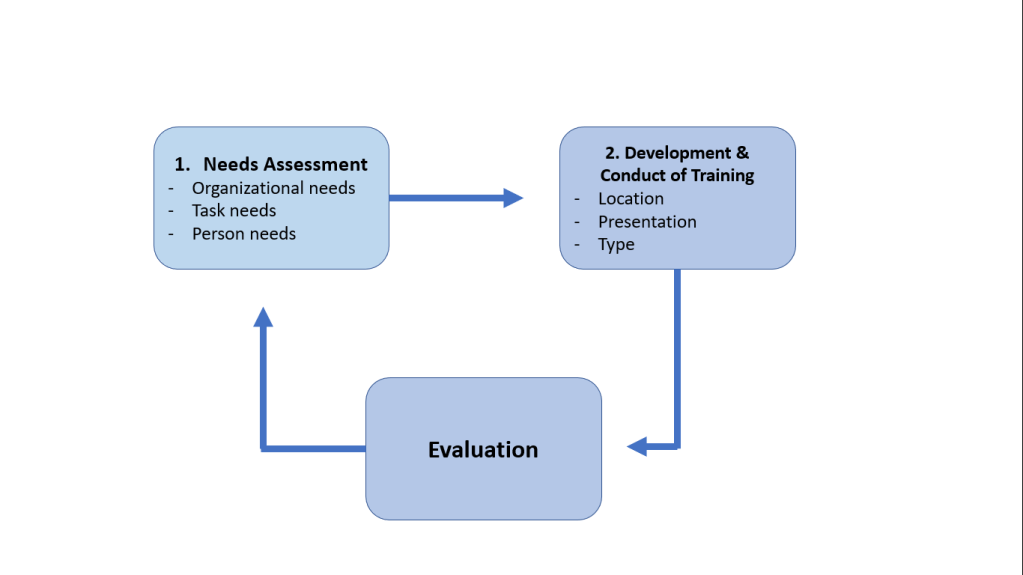
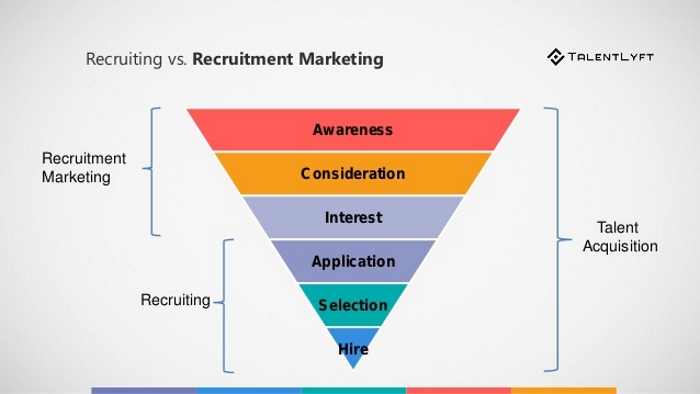
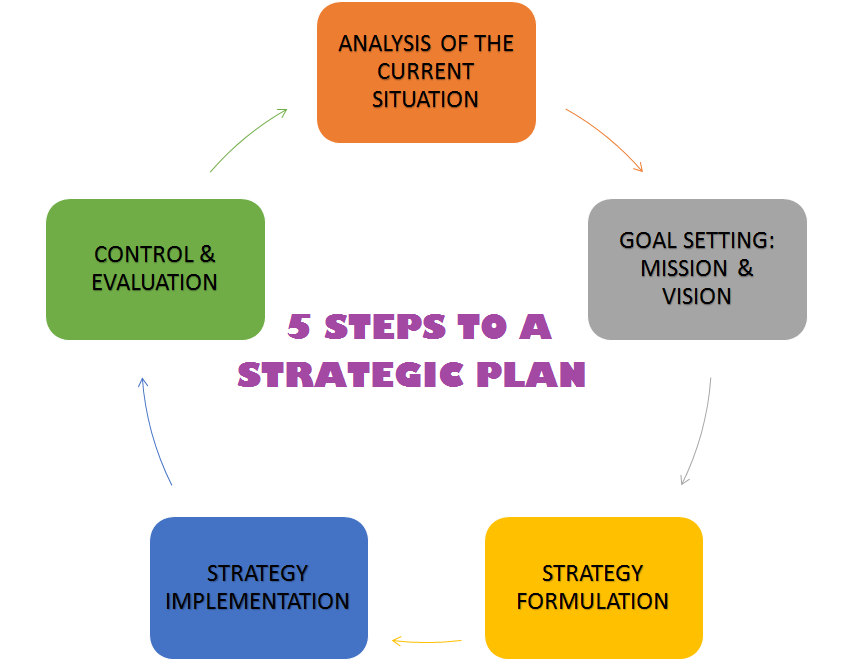 source of the image:
  pblconblog.video.blog
